What colors are best for a pickleball court?
Practical ways to pick in-bounds and out-of-bounds colors, lines, and layouts for backyard and community courts in Utah.
Updated October 7, 2026
TL;DR: The best pickleball court colors pair a playing surface that contrasts with the surround, avoid matching your ball color, and use crisp line paint made for courts. Grit Courts builds and resurfaces pickleball, basketball, tennis, and multi-sport courts across Utah and the Wasatch Front.

Color shapes how a court plays and how it looks from the house. The right palette helps players see boundaries, track the ball, and enjoy the space in bright sun or evening light.
Grit Courts builds and resurfaces pickleball, basketball, tennis, and multi-sport courts across Utah. These are the color decisions we walk through on resurfaces and new builds. Preview schemes in the court designer, then request a quote.
What colors are best for a pickleball court?
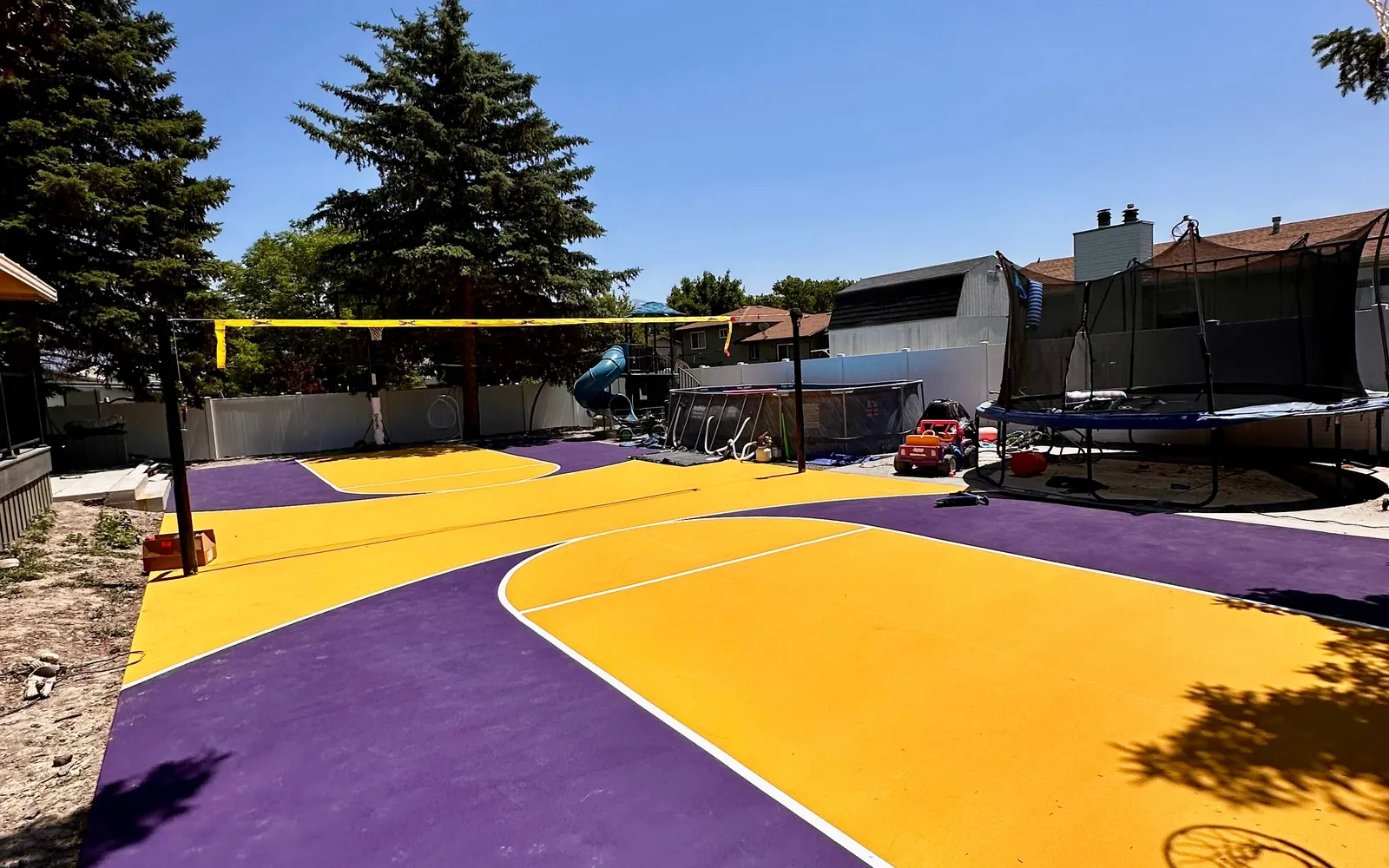
Start with contrast: the kitchen and playing surface should read clearly against the surround. Then check ball visibility: your surface should not match the pickleball hue. Finish with line colors that stay sharp on your base coats. If you also play basketball or tennis on the same slab, plan one dominant surface color so extra line colors do not fight each other.
What is the best color combination for a pickleball court?
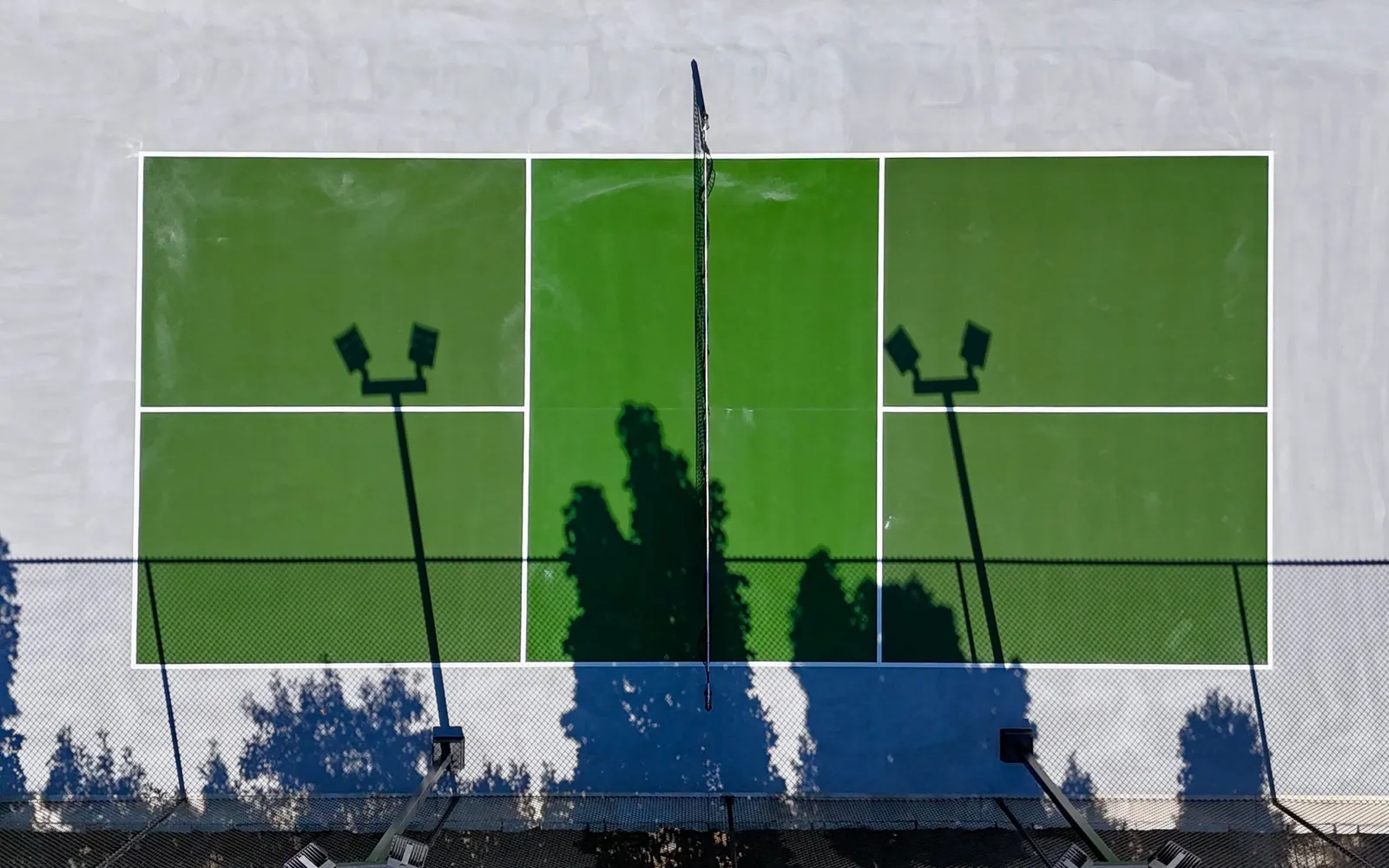
The playing area and the surround (out-of-bounds) should be easy to tell apart at a glance. Strong contrast between the two main surface colors is the foundation. Similar greens or grays can look refined in a photo but blur where play stops on court.
A clear shift in hue or value (lighter surround with a deeper playing surface, or the reverse) usually works better than two near-match shades. Any slab that extends past the lines is part of that story, not an afterthought.
What green court colors can I choose?
In our court designer, green options include Competition Green and Medium Green.
- Competition Green: The brighter classic court green. It reads clearly as a playing surface against lighter surrounds.
- Medium Green: A deeper, darker green that can blend more quietly with landscaping while still contrasting with out-of-bounds areas.
Preview both on your layout in the court designer before you lock in coatings.
What blue court colors can I choose?
Blue court colors in the designer include Competition Blue, Light Blue, and Sky Blue.
- Competition Blue: A deep navy blue that pairs well with white lines and lighter surrounds.
- Light Blue: A medium, brighter blue that stands out from pale out-of-bounds coatings.
- Sky Blue: A light, soft blue for a calmer look on the playing surface or surround.
Swap blues and greens in the court designer to see how each reads at full court scale.

Try combinations before you commit
Not sure which pairing will read well at full size? Use our court designer to preview surface and line colors on a layout. Swap options, then share what you like when you request a quote.

How do I pick colors for ball visibility on a pickleball court?
Pickleballs read differently than tennis balls or basketballs. Practical checks for pickleball-first courts:
- Pickleball: avoid a playing surface in the same color family as your ball.
- Multi-sport: if basketball or tennis lines share the slab, choose a surface color for the game you play most, then pick line colors so each sport stays distinct.
How should in-bounds and out-of-bounds colors contrast?
On tennis or basketball zones within the same pad, the same contrast rules apply: boundaries should be obvious at a glance. White lines are the default on many courts because they read on blue, green, red, and gray.
How do court colors match your home and landscape?
Courts are a big visual plane. Surround colors that echo trim, stone, or roof lines often feel intentional; the playing area can still be vivid. In Utah's bright light, very pale coatings can wash out. Slightly richer tones sometimes hold up better.
When you are narrowing options, the court designer is a handy way to compare schemes before colors go on the estimate.
How do heat and glare affect color choice?
Darker surfaces tend to absorb more sun; very light ones can glare when the sun is low. Orientation, shade, and when you usually play all matter. Many homeowners balance comfort with contrast: a moderately toned playing area and a lighter surround, or darker color where the court stays shaded.
What line colors work on multi-sport layouts?
White lines are the default on many courts because they read on blue, green, red, and gray. On very light surfaces, a deeper line color may show up better if your HOA or league allows it. Sport-line coatings are made for abrasion and UV, not house trim paint.
One slab can carry pickleball, basketball, tennis, or volleyball lines if you plan the stack: one dominant surface color, a contrasting surround, and one or two line colors so overlapping sports do not look messy. Match the layout to how you actually play before you finalize colors.
What should I know about HOA and neighborhood color rules?
Backyard courts can still face HOA review for color, fencing, or hardscape. Check guidelines before ordering coatings. Neutral surrounds with a restrained playing-area color often review more smoothly than loud contrasts visible from the street. A designer screenshot or simple color sketch can help compared to describing colors in words alone.
How does Grit Courts help with court colors?
We handle prep, acrylic color systems, and line work for new courts and resurfacing across Utah. Bring photos, HOA notes, or designer exports. We will help you land on a palette that looks good from the house and works on game day.
Ready to get started?
Reach out through our contact page for a free estimate. Tell us your sports, court size, and any color ideas you have already tried in the designer.
Get a quote · Court designer · Court resurfacing · Court FAQs
Frequently asked questions
What colors are best for a pickleball court?
Choose a playing surface color that contrasts clearly with the out-of-bounds surround, avoids the same hue as your pickleball, and stays readable in Utah sun. Blue or green playing areas with a lighter surround are common. White or crisp line colors on top complete the look.
What is the best color combination for a pickleball court?
A clear shift in hue or value between the in-bounds surface and the surround works best: lighter surround with a deeper playing area, or the reverse. Similar greens or grays can blur boundaries on court even when they look refined in photos.
Why does in-bounds vs out-of-bounds contrast matter?
The playing area and surround should be easy to tell apart at a glance. Strong contrast between the two main surface colors is the foundation. Similar greens or grays can blur where play stops on court. A clear shift in hue or value usually works better than two near-match shades.
How do I pick colors for ball visibility on a pickleball court?
Avoid a playing surface in the same color family as your ball. Yellow and green pickleballs disappear on green courts; neon balls can clash on loud surrounds. Preview pairings in the court designer before you order coatings.
Can I preview court colors before I commit?
Yes. The court designer lets you preview surface and line colors on a layout, swap options, and share what you like when you request a quote.
How do heat and glare affect pickleball court color choice?
Darker surfaces tend to absorb more sun; very light ones can glare when the sun is low. Orientation, shade, and when you usually play all matter. Many homeowners balance comfort with contrast: a moderately toned playing area and a lighter surround, or darker color where the court stays shaded.
Should I check HOA rules before choosing court colors?
Backyard courts can face HOA review for color, fencing, or hardscape. Check guidelines before ordering coatings. Neutral surrounds with a restrained playing-area color often review more smoothly than loud contrasts visible from the street.